
Location: Rabat, Central Malta
Type: Historic Town / Archaeological Heritage / Cultural Landmark
Rabat is one of Malta’s most historically important towns and sits directly beside the ancient city of Mdina. While Mdina was the fortified home of Malta’s nobility, Rabat developed outside the city walls and became an important centre for ordinary residents, trade, religion, and daily life. Furthermore, the town is home to some of Malta’s most fascinating Roman and early Christian remains.
The name Rabat comes from the Arabic word for suburb, reflecting the town’s close connection with Mdina. Over the centuries, Roman, Arab, medieval, and Christian influences shaped the area. As a result, visitors can discover ancient ruins, underground catacombs, historic churches, and traditional Maltese streets within a relatively small area.
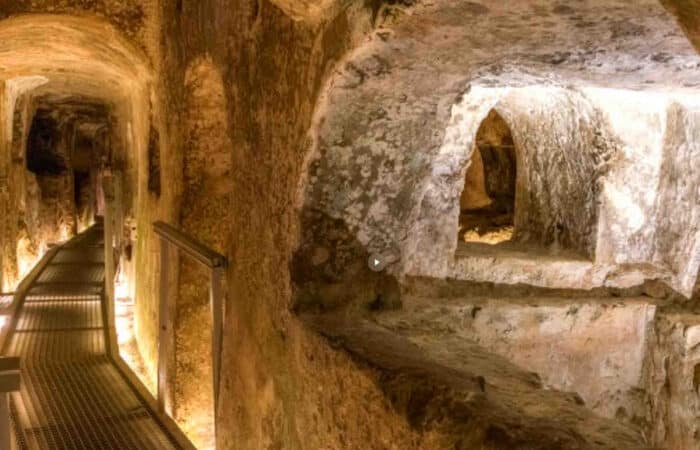
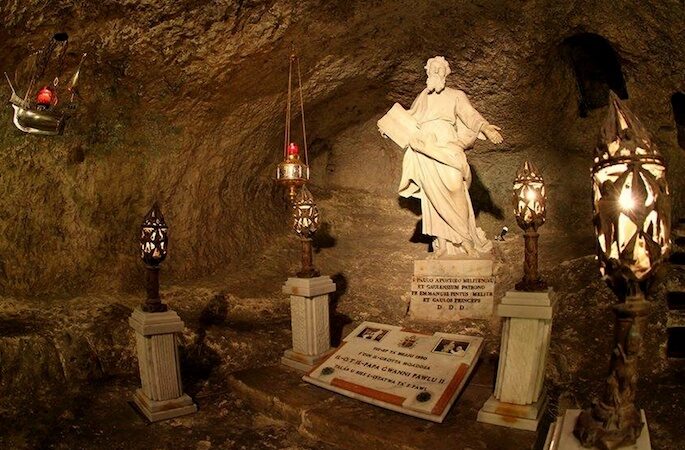
One of Rabat’s greatest attractions is St Paul’s Catacombs, an extensive underground complex of burial chambers dating from the Roman period. In addition, visitors can explore St Paul’s Grotto, traditionally associated with the apostle’s stay in Malta after his shipwreck in AD 60.
The Domus Romana, also known as the Roman Villa, provides another fascinating glimpse into ancient life. Its beautifully preserved Roman mosaics and archaeological remains reveal the wealth and lifestyle of the people who lived in the area nearly 2,000 years ago.
Meanwhile, Rabat’s narrow streets lead to historic churches, small squares, cafés, and traditional houses. Consequently, the town is ideal for visitors who want to experience Malta beyond the main tourist centres.
Whether you are interested in Roman history, early Christianity, archaeology, or traditional Maltese culture, Rabat offers plenty to discover.
Rabat has played an important role in Malta’s history since Roman times. More importantly, its location next to the ancient capital made it an important settlement for thousands of years.
During the Roman period, the area around Mdina and Rabat became an important urban centre. Later, Christianity left a strong mark on the town, particularly through the traditions connected with St Paul and the development of underground burial complexes.
Furthermore, the town’s religious heritage continued to grow during the medieval period and under the Knights of St John. As a result, Rabat became home to numerous churches, convents, and religious institutions.
Today, the town remains one of the best places in Malta to explore the island’s ancient and early Christian heritage. Consequently, Rabat and nearby Mdina are often visited together.
Rabat can be visited throughout the year. However, spring and autumn offer the most comfortable temperatures for walking between the town’s archaeological sites and historic streets.
Furthermore, early morning is an excellent time to explore the catacombs and nearby Mdina before the busiest part of the day. During summer, visiting earlier or later in the afternoon helps avoid the strongest heat. In addition, the underground catacombs provide a naturally cooler experience during hot weather.
Meanwhile, winter offers mild temperatures and fewer visitors, making it a peaceful time to discover Rabat’s historic attractions.
Rabat is located in central Malta, directly beside Mdina, and can easily be reached by car or public bus from Valletta, Sliema, St Julian’s, and other parts of the island. Furthermore, hop-on hop-off sightseeing buses commonly include Mdina and Rabat on their routes, making the area convenient for visitors using organised sightseeing transport.
In addition, several guided tours of Malta visit Rabat together with Mdina, often including St Paul’s Catacombs and other nearby attractions. Consequently, joining a guided tour can be a convenient way to explore several important historical sites in one day.
The town is very walkable, although comfortable shoes are recommended because many streets are paved with traditional stone. Moreover, cafés, restaurants, shops, and public transport connections are available throughout the area.



 Deutsch
  English (UK)
  Italiano
  Français
  Polski
  Български
  Русский
  Español
  Română