
Location: Marsaxlokk, South-Eastern Malta
Type: Fishing Village / Coastal Town / Cultural and Historical Heritage
Marsaxlokk is one of Malta’s most recognisable coastal villages. Located around a large natural harbour in the south-east of the island, it is famous for its traditional fishing boats, colourful waterfront and relaxed atmosphere.
The village is strongly connected with Malta’s fishing traditions. In particular, visitors can see rows of luzzu boats floating in the harbour. These brightly painted wooden boats often feature the traditional eye symbol, which is associated with protection.
Furthermore, Marsaxlokk has a long history linked to the sea. The harbour provided a natural shelter for ships, while the surrounding area contains archaeological remains from several ancient periods.
Today, the village combines local life with tourism. Restaurants line the waterfront, fishing boats remain part of the scenery, and the harbour creates one of the most memorable views in southern Malta.
Marsaxlokk has a history that reaches far beyond its modern fishing traditions. Archaeological discoveries around the village show that people used the area thousands of years ago.
At Tas-Silġ, near the harbour, researchers found remains from different periods of Maltese history. These include evidence connected with prehistoric, Punic, Roman, Byzantine and later settlements. Ancient religious activity also took place here, making the area important for understanding Malta’s early Mediterranean connections.
The harbour itself added to Marsaxlokk’s importance. Its sheltered waters offered a natural stopping point for vessels travelling through the Mediterranean.
During the late medieval and early modern periods, the village developed around farming and fishing. Later, Marsaxlokk became an important coastal location during periods of military activity because of its strategic harbour.
Over time, however, fishing became the defining feature of local life. This tradition remains visible today and gives Marsaxlokk a character that feels different from Malta’s fortified cities.
Start your visit along the waterfront, where the colourful fishing boats create the village’s most famous view. Walking beside the harbour is especially enjoyable in the morning, when the boats, sea and village buildings combine into a classic Maltese scene.
The luzzu is one of the symbols of Malta. These traditional fishing boats are usually painted in bright colours and often carry the distinctive eye motif.
Take some time to look across the harbour rather than simply passing through. The boats are one of the main reasons Marsaxlokk is so popular with photographers.
The parish church of Our Lady of Pompeii stands close to the village centre. Construction began in the late 19th century, and the church became the centre of the newly established parish of Marsaxlokk in 1897.
Its position adds to the character of the waterfront, while the interior contains religious paintings, statues and decorative details.
The village is also well known for its market tradition. Sunday is particularly popular, when the waterfront becomes much busier and market stalls attract both local residents and visitors.
You can browse food, local produce, souvenirs and other goods while enjoying the harbour atmosphere. Therefore, Sunday can be a lively time to experience Marsaxlokk, although visitors looking for a quieter walk may prefer another day.
Marsaxlokk Bay provides a broad coastal setting around the village. The sheltered waters help explain why the area became important for fishing and maritime activity.
From the shoreline, you can enjoy views across the bay and watch boats moving between the harbour and the open Mediterranean.
Just outside the main village area, Tas-Silġ is an important archaeological site. Excavations revealed remains from several periods, including a major ancient sanctuary and later religious structures.
Although it is not the same type of attraction as the waterfront, Tas-Silġ adds another layer to a visit by showing how deeply the area is connected with Malta’s ancient past.
Marsaxlokk can be visited throughout the year. However, spring and autumn are particularly pleasant because temperatures are generally comfortable for walking.
Sunday is the busiest day because of the market. Consequently, visitors who want to experience the village at its liveliest should consider arriving earlier in the day.
For a quieter atmosphere, visit on a weekday morning. During summer, an early start also helps you avoid the strongest midday heat.
Late afternoon can be another attractive option. As the light changes across the bay, the colourful boats and waterfront become especially photogenic.
Marsaxlokk works well as part of a wider south-eastern Malta itinerary. Nearby attractions include St Peter’s Pool, a striking rocky swimming area with clear Mediterranean water.
Delimara Peninsula is also close and offers coastal scenery, countryside and walking opportunities. In addition, the area around Ħaġar Qim and Mnajdra contains some of Malta’s most important prehistoric temples.
The historic city of Żejtun is another option for visitors interested in traditional Maltese architecture and local history. Meanwhile, Valletta can be reached easily by road from Marsaxlokk and makes a useful combination for a full day of sightseeing.
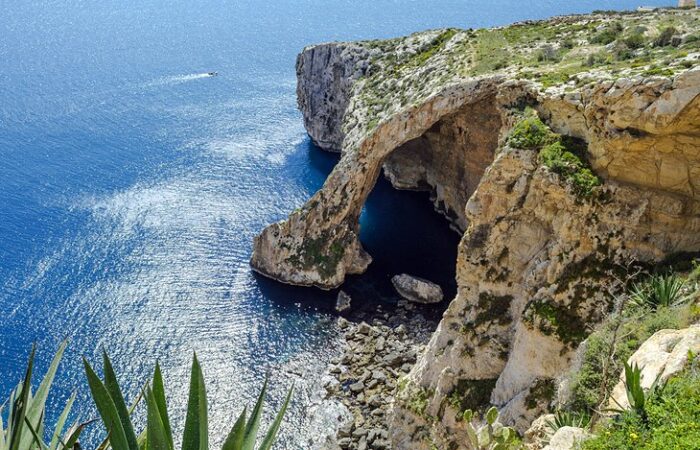
Сайт Голубая пещера (Blue Grotto) is a popular coastal attraction in southern Malta, known for its dramatic cliffs, sea caves and bright blue Mediterranean waters. It makes an easy addition to a day exploring Marsaxlokk and the surrounding area.
Marsaxlokk is easy to reach from Valletta and other parts of Malta by car, bus or organised tour. The village itself is compact, so the main waterfront attractions are best explored on foot.
Sunday is an especially good day to visit because Marsaxlokk hosts its famous weekly market. Guided tours to Marsaxlokk are also available on Sundays, making this a convenient option for visitors who prefer organised sightseeing.
In addition, the South Hop-On Hop-Off Bus visits Marsaxlokk every day as part of its southern Malta route. The route also includes attractions such as the Three Cities, Żejtun, Għar Dalam, the Blue Grotto and the Ħaġar Qim and Mnajdra temples. On Sundays, the bus cannot travel directly along the Marsaxlokk seafront because of the market, so visitors walk a short distance to reach the waterfront.

 Русский
 English (UK)
 Italiano
 Français
 Polski
 Български
 Español
 Deutsch
 Română