
Location: Malta and Gozo, Maltese Islands
Type: Prehistoric Archaeology / Megalithic Temples / UNESCO World Heritage Site
The Megalithic Temples of Malta and Gozo are among the most remarkable prehistoric monuments in the Mediterranean. Built thousands of years ago, these enormous stone structures reveal the extraordinary skills of the communities that inhabited the islands during the Neolithic period.
The temples were constructed mainly during the 4th and 3rd millennia BC, making them among the earliest free-standing stone buildings in the world.
The UNESCO World Heritage property includes six archaeological sites: Ġgantija on Gozo, together with Ħaġar Qim, Mnajdra, Ta’ Ħaġrat, Skorba and Tarxien on Malta. These sites contain several individual temple structures, each with its own architectural features and archaeological history.
Unlike the pyramids of ancient Egypt, the Maltese temples were not royal tombs. Instead, their design and the objects discovered inside suggest that they served important ritual and ceremonial purposes.
Today, visitors can explore these ancient monuments, learn about prehistoric life and discover how early communities developed a sophisticated building tradition using the limestone available on the islands.
The story of Malta’s prehistoric temples begins more than 5,000 years ago, when farming communities developed increasingly complex settlements across the islands.
These communities built monumental structures using enormous blocks of limestone. They shaped entranceways, created curved chambers and decorated some interiors with carved patterns and reliefs.
The builders had no metal tools comparable to those used by later civilisations. Instead, they relied on stone tools, practical knowledge and organised labour to move and position the heavy blocks.
Over time, temple architecture developed into a distinctive tradition. The buildings often featured a central passage leading into curved chambers, commonly called apses. Some complexes also had forecourts and monumental entrances.
Archaeological discoveries suggest that the temples were important centres for ceremonies and community gatherings. Animal bones, pottery, figurines and decorated stonework provide clues about the activities that took place there.
However, the exact religious beliefs of the people who built the temples remain uncertain. Because no written records from these communities explain their rituals, archaeologists continue to study the buildings and their contents.
The temple-building tradition eventually declined around the middle of the 3rd millennium BC. Nevertheless, the surviving structures provide an extraordinary record of prehistoric architecture.
Ġgantija is one of the most impressive prehistoric sites in the Maltese Islands. Located on the Xagħra plateau on Gozo, the complex contains two enormous temples enclosed within a common outer wall.
The structures were built during the Late Neolithic period, with their main phases dating to approximately 3600–3200 BC.
Their name comes from the Maltese word ġgant, meaning giant. According to local legend, only giants could have moved the enormous stones used in their construction.
The temples demonstrate remarkable engineering. Their walls contain huge limestone blocks, some weighing several tonnes, while the internal chambers follow a carefully planned arrangement.
The site also includes an interpretation centre displaying archaeological finds and explaining prehistoric life on Gozo.
Ġgantija is one of the key reasons the Maltese megalithic temples received international recognition. It was inscribed on the UNESCO World Heritage List in 1980, before the property was extended to include the other temple sites.
Ħaġar Qim stands on a ridge overlooking the Mediterranean Sea near Qrendi, on Malta’s southern coast.
The complex dates mainly to the 4th millennium BC and consists of several megalithic structures. Its main temple is particularly notable for its enormous limestone blocks and unusual arrangement of chambers.
Some of the stones are decorated with carved patterns, while other features suggest that the builders paid close attention to the movement of light through the structure.
Archaeologists discovered altars, decorated stonework and prehistoric objects at the site. These finds help explain the importance of ceremonial activity within the temples.
A protective shelter now covers much of the complex. It helps shield the ancient limestone from weathering while allowing visitors to explore the monument.
The visitor centre also presents information about the temple builders and their construction techniques.
Mnajdra lies around 500 metres downhill from Ħaġar Qim, close to Malta’s southern cliffs.
The complex contains several temple structures built during different stages of the prehistoric period. Its position and architectural layout make it particularly interesting to researchers studying ancient astronomy.
The South Temple is famous for its solar alignment. Around the spring and autumn equinoxes, sunlight passes through the entrance and illuminates specific parts of the building. At the solstices, the light reaches different positions within the temple.
These alignments suggest that the builders carefully observed the movement of the Sun. However, their precise purpose remains a subject of archaeological interpretation.
Beyond its astronomical features, Mnajdra is an impressive architectural site. Its apses, stone entrances and surviving walls provide a clear picture of the temple-building tradition.
A modern shelter protects the structures from the elements.
The Tarxien Temples are located in Paola, close to Malta’s Grand Harbour area.
Unlike the more isolated temple sites in the countryside, Tarxien stands within a developed urban area. Despite this setting, the complex preserves some of the most important examples of prehistoric stone decoration in Malta.
The site contains several interconnected temple structures dating mainly from the late 4th and 3rd millennia BC.
One of its most remarkable features is the carved stonework. Visitors can see spiral patterns, animal reliefs and other decorative elements that demonstrate the skill of the temple builders.
Archaeologists discovered evidence of animal sacrifice and ceremonial activity at Tarxien. They also found fragments of statues and other objects that provide insights into the site’s religious significance.
The complex is especially valuable because its remains reveal several stages in the development of Maltese prehistoric architecture.
The Ta’ Ħaġrat temples are located in the village of Mġarr in north-western Malta.
The complex consists of two adjacent structures, with the main temple dating to an early phase of Malta’s megalithic tradition.
Its architecture includes a monumental entrance, a paved courtyard and a layout built around curved chambers.
The stones are smaller than some of the enormous blocks found at Ġgantija and Ħaġar Qim. Nevertheless, the structures demonstrate the same careful planning and understanding of limestone construction.
The site also provides valuable information about the development of temple architecture. Differences between its buildings and later monuments reveal how prehistoric construction methods evolved.
Ta’ Ħaġrat is a quieter attraction than Malta’s larger archaeological parks and offers an opportunity to explore an important temple complex away from the busiest tourist areas.
Skorba lies on the outskirts of Żebbiegħ, close to Mġarr in northern Malta.
Although the surviving temple structures are relatively modest, the site is extremely important for archaeology.
Excavations uncovered remains from the earliest phases of human settlement on Malta, including evidence of domestic buildings, pottery, animal bones and other everyday objects.
These discoveries helped researchers establish a clearer chronology of Maltese prehistory. In particular, the finds from Skorba provided important reference points for dating other archaeological sites across the islands.
The complex contains the remains of two megalithic temple structures built during different phases of the prehistoric period.
Skorba offers a different perspective from the monumental temples. Rather than focusing only on impressive stone architecture, it helps visitors understand the everyday lives of the people who created this remarkable culture.
One of the biggest mysteries surrounding the megalithic temples is how prehistoric builders moved such enormous stones.
The builders used locally available limestone, choosing harder coralline limestone for many external walls and softer globigerina limestone for some interior features and decorative elements.
They worked without modern machinery, cranes or metal construction tools. Instead, they relied on stone tools, levers, rollers and carefully organised teamwork.
The curved layout of the temples also demonstrates an advanced understanding of space and construction.
Some structures contain upright stones supporting horizontal blocks, forming monumental doorways and passages. Others include elaborate chambers arranged around central spaces.
The temples therefore provide evidence of a highly organised prehistoric society with specialised building knowledge, artistic traditions and shared ceremonial practices.
The Megalithic Temples of Malta were added to the UNESCO World Heritage List in 1980, when Ġgantija became the first component of the property.
In 1992, the inscription was extended to include the other major temple sites across Malta and Gozo.
UNESCO recognises the temples for their exceptional architectural achievements and their importance in understanding prehistoric civilisation.
Their distinctive designs, monumental proportions and carved decoration demonstrate a level of craftsmanship that is remarkable for the period.
The temples also preserve evidence of a society that developed its own architectural tradition long before the rise of the major civilisations of the eastern Mediterranean.
Today, they are among Malta’s most important cultural attractions and provide an extraordinary connection with the island’s distant past.
The six UNESCO-listed temple complexes are not the only prehistoric attractions in Malta.
The Ħal Saflieni Hypogeum is an underground prehistoric complex in Paola. Unlike the megalithic temples, it is a multi-level structure carved into the rock and was used as a burial site.
It is a separate UNESCO World Heritage Site and contains remarkable chambers, carved features and traces of prehistoric decoration.
Visitor numbers are strictly limited to help protect the site, so advance booking is essential.
Borġ in-Nadur is an archaeological site near Birżebbuġa. It includes the remains of a prehistoric temple and a fortified settlement dating to later phases of Maltese prehistory.
The site helps explain how settlement patterns and construction traditions changed after the main temple-building period.
Tas-Silġ, near Marsaxlokk, is an archaeological complex with an exceptionally long history of religious activity.
A prehistoric temple was built here during the Tarxien phase. Later, the site was adapted for religious use during Phoenician, Punic and Roman times.
Tas-Silġ therefore demonstrates how certain sacred locations remained important to successive communities over many centuries.
• Ġgantija Temples – UNESCO World Heritage Site, Gozo
• Ħaġar Qim – UNESCO World Heritage Site, Malta
• Mnajdra Temples – UNESCO World Heritage Site, Malta
• Tarxien Temples – UNESCO World Heritage Site, Malta
• Ta’ Ħaġrat Temples – UNESCO World Heritage Site, Malta
• Skorba Temples – UNESCO World Heritage Site, Malta
• Ħal Saflieni Hypogeum – separate UNESCO World Heritage Site
• Borġ in-Nadur prehistoric site
• Tas-Silġ Archaeological Complex
• Prehistoric artefacts and interpretation displays
• Ancient limestone architecture and carved stone decoration
• Solar alignment at Mnajdra
The megalithic temples can be visited throughout the year.
Spring and autumn are particularly pleasant because temperatures are generally comfortable for exploring outdoor archaeological sites.
During summer, early mornings and late afternoons are better for sightseeing, especially at Ħaġar Qim and Mnajdra, where parts of the visitor route are exposed to the sun.
Winter is also a good time to explore the temples. Although rain and wind are possible, cooler temperatures can make walking between the monuments more comfortable.
If you plan to visit several sites in one day, check opening times and ticket arrangements in advance. Some complexes offer combined admission, while the smaller temples may have more limited access.
The location of each temple makes it easy to combine prehistoric sites with other Maltese attractions.
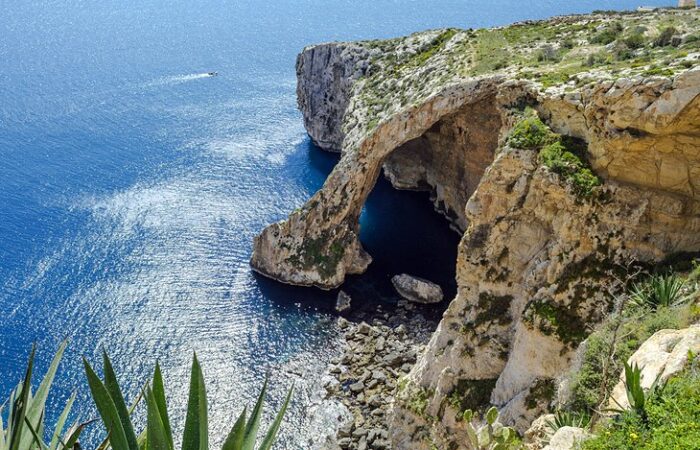
Around Ħaġar Qim and Mnajdra, visitors can explore the Blue Grotto viewpoint, Wied iż-Żurrieq and the coastal countryside near Qrendi.
Tarxien Temples can be combined with the Ħal Saflieni Hypogeum and the historic Three Cities, although the Hypogeum should be booked well in advance.
Ta’ Ħaġrat and Skorba are close to the village of Mġarr and make a good addition to a northern Malta itinerary.
On Gozo, Ġgantija can be combined with Ta’ Kola Windmill, Xagħra, Ramla Bay and Victoria’s Citadel.
The megalithic temples are spread across Malta and Gozo, so it is more practical to explore them by area rather than attempting to visit every site in a single day.
On Malta, Ħaġar Qim and Mnajdra are located near each other and can be visited together. Tarxien is further east, while Ta’ Ħaġrat and Skorba are near Mġarr.
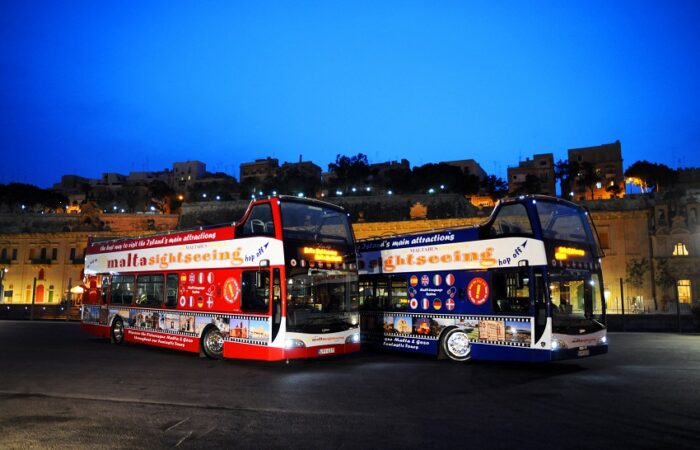
Ġgantija is on Gozo, near Xagħra. To reach it from Malta, take the Gozo Channel ferry from Ċirkewwa to Mġarr and continue by car, taxi, public bus or hop on hop off bus.
Allow approximately 1–2 hours for the Ħaġar Qim and Mnajdra Archaeological Park, including the visitor centre and both temple complexes. Ġgantija also normally takes around an hour, while the other sites require additional time depending on your interests.
If you want to visit several temples, plan separate routes for Malta and Gozo. This reduces travel time and allows more time to appreciate the monuments.
• Google Maps – Megalithic Temples of Malta and Gozo
• UNESCO World Heritage Centre – Megalithic Temples of Malta
• Official Website – Heritage Malta
• Weather Forecast – Malta









 Italiano
 English (UK)
 Français
 Polski
 Български
 Русский
 Español
 Deutsch
 Română